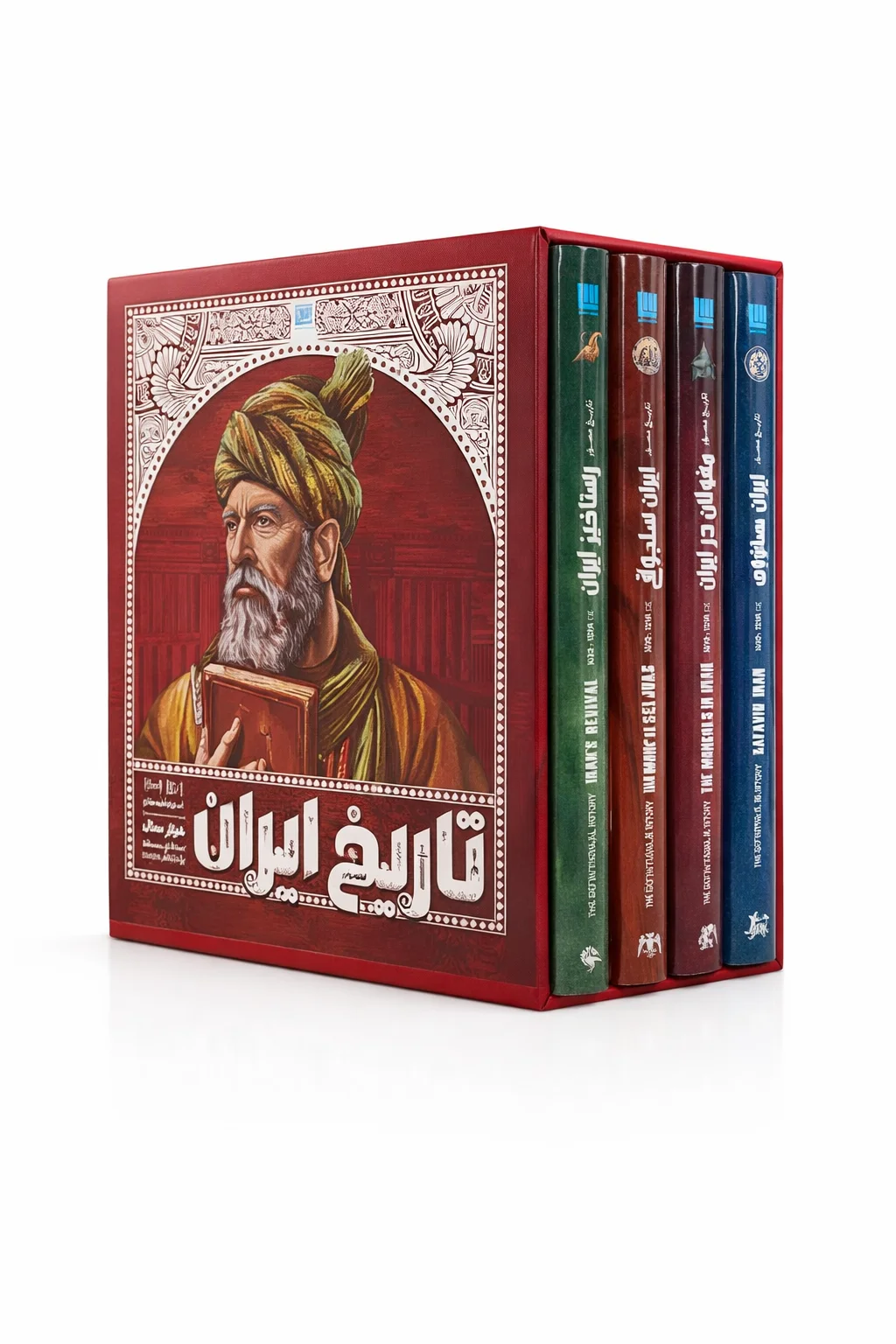
Iran's Revival
From the Fall of the Sasanians to the Samanids
€85.60Only 2 left
Prices include German VAT. Shipping is added at checkout, and VAT is recalculated from your delivery address (no VAT outside the EU; other EU countries may differ).
SKU: PX-BK-SAS-SAM-001
1
Ships in 2–4 days
14-day returns
Secure checkout
This book explores the history of Iran and its people during the first four centuries of the Islamic era. Its five chapters cover the following subjects:
Shipping & returns
Tracked delivery with DHL; US orders ship with DHL Express. Shipping is calculated at checkout from parcel weight and dimensions.
Chapter One examines the Arab conquest of Iran and its aftermath, including the emergence of concepts such as mawali (non-Arab Muslim clients), Arab migration to Iran, the development of new forms of mosque architecture, and the fate of the Sasanian aswaran (cavalrymen). The chapter seeks to examine the conquests and the events that followed the arrival of the Arabs in Iran without resorting to extreme interpretations, relying instead on historical and archaeological evidence, including coin inscriptions and Pahlavi documents.
Chapter Two focuses on Iranian efforts to regain their position within the political system. It traces developments beginning with the uprising of Abu Muslim of Khurasan and those who sought to avenge his death, continuing through the influence of Iranian statesmen such as the Barmakid family and the Ibn Sahl brothers. Following the conflict between al-Amin and al-Ma'mun, these developments culminated in Tahir Dhu'l-Yaminayn's pursuit of political independence in Nishapur.
Chapter Three explores religion in Iranian society, including the position of Zoroastrians under the new political order, the Khurramite movement, religious conversion, the various Islamic schools and sects in Iran, and other religious communities, including Christians, Jews, and Manichaeans. It also examines the production of the earliest Qur'anic manuscripts in Iran, the emergence of Sufism, popular beliefs, and the transformation of older religious traditions into new forms.
Chapter Four surveys developments across different fields of learning, as well as intellectual and commercial centres such as Gondishapur and Siraf. It examines the remarkable expansion of scientific and intellectual activity during these centuries, exploring how the emergence of a vast interconnected realm, together with developments such as the spread of paper, helped usher in a golden age of learning.
Chapter Five addresses language and the tensions between Persian and Arabic. Its subjects include the period when Arabic became a major language of literary expression in Iran, efforts by Persian speakers to develop a new writing system, patrons of the Persian language, the role of merchants and scholars in the spread of Persian, and the enduring tradition of preserving Iran's national epic heritage.
The Iran's Revival
Author: Ehsan Rezaei
Contributors
- Dr. Mohammad Esmaeil Esmaeili Jelodar — Siraf.
- Dr. Saman Tofigh — The Ispahbads of Tabaristan; Espahbod Khorshid Cave.
- Dr. Shahram Jalilian — Gundeshapur.
- Dr. Khodadad Rezakhani — The Conquests and Wars of Khosrow II; Eastern Iran during the Age of the Conquests.
- Dr. Keyvan Joorabchi, Zahra Sadat Al-Ahmad, and Siavash Golmohammadi — Iranian Architecture in the First Two Centuries; Iranian Architecture in the Third and Fourth Centuries.
- Dr. Seyedeh Zahra Zarei — The Persian Gulf and the Expansion of the Persian Language.
- Dr. Sara Saghaei — Writing on Pottery.
- Dr. Hossein Sedighian — Wooden Artifacts of the Early Islamic Centuries; Nishapur Pottery.
- Maliheh Tahmasbi — Metalwork of the Early Islamic Centuries.
- Dr. Laya Alinia — Games in Iran after the Advent of Islam.
- Mahshid Farahani — Iranian Music in the Age of Transition.
- Dr. Haydeh Laleh and Dr. Zahra Larzadeh — The City of Nishapur.
- Dr. Majid Montazerzohouri — The Earliest Mosques of Iran.
- Dr. Ali Moloudi Arani — The Vigol Fire Temple at Haraskan.
- Seyed Hossein Morakkabi — The Earliest Qur'ans in Iran.
- Ali Ardam — Bukhara.
- Fahimeh Hatami — Cupping Horns.
- Sara Fereydouni — Ceramic Lamps; Amulet Boxes.
Advisors
- Academic Advisor: Ali Bahramian
- Indexing Consultant: Nader Matlabi Kashani
- Senior Advisors: Dr. Jebrael Nokandeh and Dr. Fereidoun Biglari
- Advisor on Islamic Art: Karam Mirzaei
Details
- Publisher
- PersePix
- Published
- 2 May 2026
- Format
- Hardcover
- Language
- Persian
- Pages
- 312
- Dimensions
- 35 × 25 × 2 mm
- Weight
- 2 g
- Printed in
- Iran
Reviews
Nothing here yet.