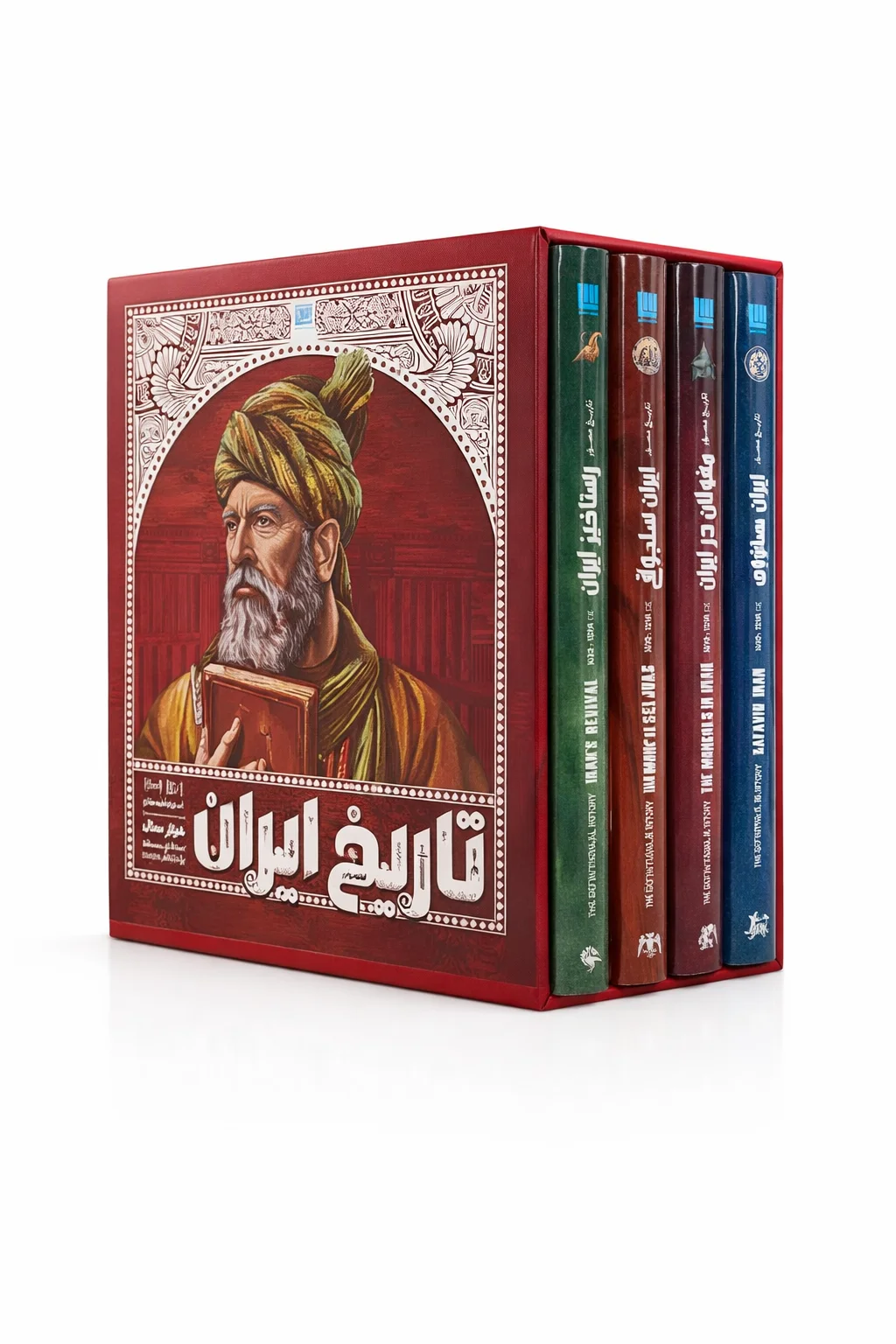
The Definitive Visual History of Iran (622–1722)
The Mongols in Iran
From The Definitive Visual History of Iran (622–1722) A Millenium of Reunification
€85.60Only 2 left
Prices include German VAT. Shipping is added at checkout, and VAT is recalculated from your delivery address (no VAT outside the EU; other EU countries may differ).
SKU: PX-BK-MON-001
1
Ships in 2–4 days
14-day returns
Secure checkout
This volume of The Definitive Visual History of Iran covers the period from the seventh to the tenth centuries AH (thirteenth to sixteenth centuries CE), one of the most turbulent yet transformative chapters in Iranian history.
Shipping & returns
Tracked delivery with DHL; US orders ship with DHL Express. Shipping is calculated at checkout from parcel weight and dimensions.
From the Mongol invasion to the rise of the Safavids, Iran underwent profound changes in its political structures, administrative institutions, culture, and intellectual life. Contrary to traditional interpretations that portray this era solely as a time of destruction, recent scholarship has shown that, following the initial wave of Mongol invasions, Iran was able to establish new foundations for the continuity of its civilization amid the upheaval. At its heart, this volume tells the story of Iranian resilience and endurance in the face of extraordinary challenges.
The book is divided into four chapters.
Chapter One examines the Mongol invasion, its historical background, and its consequences.
Chapter Two explores the establishment of the Ilkhanate in Iran and the distinctive characteristics of Ilkhanid rule.
Chapter Three focuses on the period following the reign of Abu Sa'id Bahadur Khan, the last powerful Ilkhan, when regional rulers and military commanders established their authority across different parts of Iran. This chapter also explores the cultural and social life of the period, including Ilkhanid literature, art, music, and architecture.
Chapter Four turns to Timur (Tamerlane) and his successors, examining an era marked by extraordinary artistic achievements that ultimately preceded the rise of the Safavid dynasty and the flourishing of Safavid art.
Beyond its chronological account of political events, the book explores a wide range of subjects that illuminate the social and cultural history of Iran.
In Chapter One, discussions of metalwork, astronomical imagery, and the Wonders of Creation (ʿAjāʾib al-Makhlūqāt) offer insights into the intellectual and cultural atmosphere of Iranian society on the eve of the Mongol invasion.
Chapter Two examines the expansion of Sufism under the Ilkhans, while Chapter Three gives particular attention to literature. Dedicated features on Ilkhanid and Timurid architecture appear in Chapters Three and Four, respectively, and three separate sections trace developments in Iranian music during this period.
The Mongols in Iran
Edited by: Dr. Ali Bahranipour
Contributors by Chapter
Listed alphabetically
Chapter 1: A Devastating Flood
- Dr. Qubialı Atik — The Migration of Elites to Anatolia.
- Dr. Ehsan Azadi — The Second Wave of the Mongol Invasion; Resistance and False Messiahs; the Mongols in Europe; the Rule of the Khatuns.
- Dr. Ali Bahranipour — Mongol Life; the Otrar Incident; the Third Wave of the Mongol Invasion under Hülegü.
- Dr. Bayarsaikhan Dashdondog — The Charisma of Chinggis Khan.
- Dr. Zainab Jasim al-Shahabi — The Fall of Baghdad.
- Dr. Moslem Somali — Khwarazmian Policies; Jalal al-Din Khwarazmshah.
- Ehsan Rezaei — Living by the Stars; Mongol Weaponry; Infographic on the Mongol Invasions; Iranian Migration to China; Aja'ib al-Makhluqat.
- Oktamali Roshnef — The Mongol Invasion of Transoxiana.
- Dr. Mahshid Farahani — Music on the Eve of the Mongol Invasions.
- Dr. Zhaleh Kamalizad — Underground Cities.
Chapter 2: The Great Ilkhans
- Dr. Ehsan Azadi — The Juvayni Family; Rival Ilkhans.
- Dr. Heydar Ostovi — Baghdad Khatun.
- Dr. Abbas Eqbal Mehran — Christianity in the Ilkhanid Period.
- Dr. Firat Umanç — The Conversion of the Ilkhans to Islam; Öljaitü.
- Mehran Besharat Ghazani — Shanb-e Ghazan; Khwaja Rashid al-Din Fazlullah.
- Dr. Rasoul Jafarian — The Ilkhans in Iran.
- Dr. Ali Bahranipour — Khwaja Nasir al-Din Tusi; Abaqa Khan; Tekuder and Arghun; Gaykhatu; Ghazan and the Ghazanid Reforms; Abu Sa'id Bahadur Khan.
- Dr. Lorenzo Pubblici — Italians at the Ilkhanid Court.
- Dr. Keyvan Joorabchi, Zahra Sadat Al-Ahmad, and Siavash Golmohammadi — Architecture of Rab'-e Rashidi.
- Dr. Meysam Hosseinzadeh — Ilkhanid Remains at Takht-e Soleyman.
- Dr. Hassan Derakhshi — Ilkhanid Monuments in Maragheh.
- Ehsan Rezaei — The Celestial Globe; Shahnameh Tiles of Takht-e Soleyman; Attar; Rumi; Ilkhanid Numismatics; Chao Paper Money; the Church of Dzordzor.
- Dr. Seyedeh Zahra Zarei — Interactions between Trade and Sufism.
- Dr. Ahmad Fazlinejad — The Revival of the Name “Iran.”
- Dr. Zhaleh Kamalizad — Maragheh Observatory; the Dash Kasan Site in Zanjan.
- Dr. Ali Moloudi Arani — Ilkhanid Shahnamehs.
- Dr. Zahra Nasiri Shiraz — The Spread of Sufism.
Chapter 3: The Age of Local Dynasties
- Dr. Ridvan Uluşık — The Injuids.
- Dr. Ali Bahranipour — The Chobanids; Iran as Described by Ibn Battuta; Food Culture in the Mongol Period.
- Dr. Valentina Broccoli — Blue-and-White Ceramics in Pre-Safavid Iran.
- Dr. Abbas Panahi — The Mar'ashis; the Kiyas.
- Dr. Keyvan Joorabchi, Zahra Sadat Al-Ahmad, and Siavash Golmohammadi — Ilkhanid Architecture.
- Dr. Morteza Khanipour — Archaeological Evidence of the Massacre at Kan-Gohar Cave.
- Dr. Jamshid Rousta — The Qara Khitai of Kerman; the Muzaffarids.
- Ehsan Rezaei — Imitating the Shahnameh; the Transformation of the Simurgh; Sa'di; Hafez; Obeyd Zakani; Gilded Glass; the Mongol Tent; the “Gate of Paradise” Mihrab.
- Dr. Seyedeh Zahra Zarei — The Perfume Trade; the Tayyibi Rulers of Kish; the Rulers of Hormuz; Social Life in Hormuz according to Travel Accounts; the Arrival of the Portuguese in the Persian Gulf.
- Dr. Moslem Somali — The Maliks of Sistan.
- Dr. Hanadi Abdel Azim Safar Ali — The Jalayirids.
- Dr. Mahshid Farahani — Music in the Ilkhanid Period.
- Dr. Sajjad Kazemi — The Sarbadars.
- Dr. Ali Lajam Urak Moradi — Forms of Land Ownership in the Ilkhanid Period.
- Dr. Yasuhiro Yokkaichi — Celadon Ware.
Chapter 4: Timur and His Successors
- Ali Ardam — Samarkand.
- Dr. Mohammad Reza Abouei Mehrizi — Baysunghur; Molla Hossein Va'ez Kashefi.
- Dr. Ali Bahranipour — Shah Rukh and Gawhar Shad; the Herat School of Art.
- Dr. Keyvan Joorabchi, Zahra Sadat Al-Ahmad, and Siavash Golmohammadi — Timurid Architecture.
- Dr. Fatemeh Hajiabadi — Religion in the Timurid Period.
- Dr. Javad Khodadoust — Tombs of the Timurid Dynasty.
- Arash Dowlatabadi — The Application of Paleopathology in Historical Studies.
- Dr. Ali Rasouli — Sultan Husayn Bayqara; the Timurid Economy.
- Ehsan Rezaei — Shah Rukh's Mi'rajnameh; the Black Death; the Demons of Master Muhammad Siyah Qalam; Timurid Numismatics; Ghiyath al-Din Jamshid and Science in the Timurid Period; the Zij-i Iskandari; the Style of Master Kamal al-Din Behzad.
- Hassan Riahi — Weapons of the Timurid Army.
- Emad al-Din Sheikh al-Hokamaei — Documents of the Sheikh Safi Shrine.
- Dr. Mahshid Farahani — Music in the Timurid Period.
- Sara Fereydouni — Kashkul.
- Mohammad Ali Mobinov — Amir Timur.
- Dr. Mishal Mufreh Zahir — The Musha'sha'ids.
- Dr. Mostafa Namdari Monfared — Abu Sa'id Gurkan; the Qara Qoyunlu and Aq Qoyunlu.
Advisors
- Academic Advisor: Dr. Ali Bahranipour
- Indexing Consultant: Nader Matlabi Kashani
- Senior Advisors: Dr. Jebrael Nokandeh and Dr. Fereidoun Biglari
- Advisor on Islamic Art: Karam Mirzaei
Details
- Publisher
- PersePix
- Published
- 3 May 2026
- Series
- The Definitive Visual History of Iran (622–1722)
- Format
- Hardcover
- Language
- Persian
- Pages
- 340
- Dimensions
- 35 × 25 mm
- Printed in
- Iran
Reviews
Nothing here yet.